Other Common Names: Bladder dock, Hops, Native hops, Pink dock, Rosy dock, Wild hops.
Synonyms: Acetosa vesicaria.
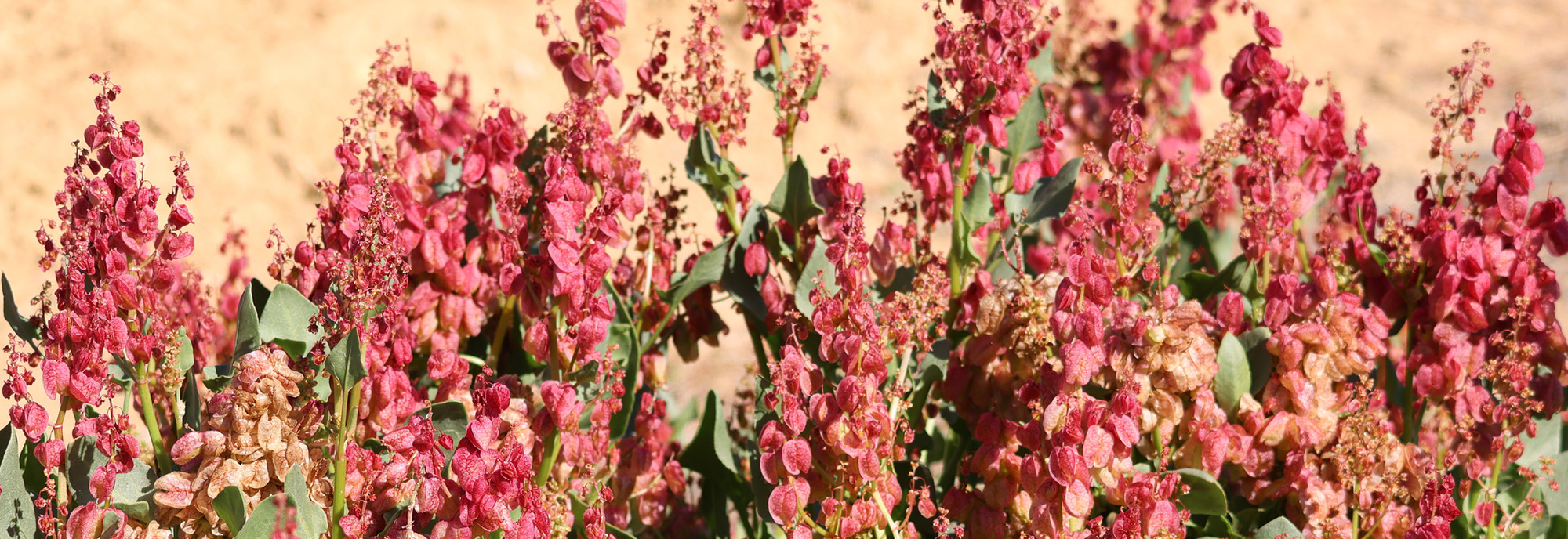

Rumex vesicarius


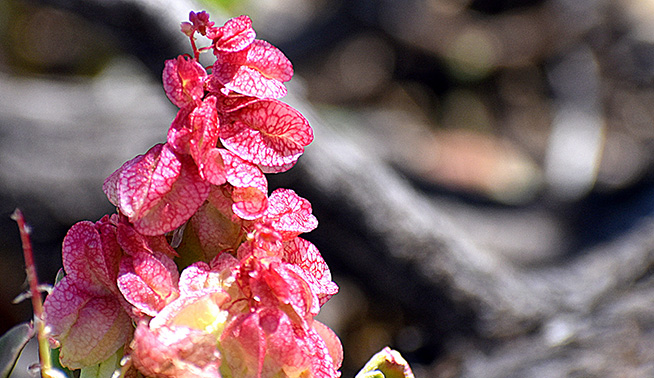
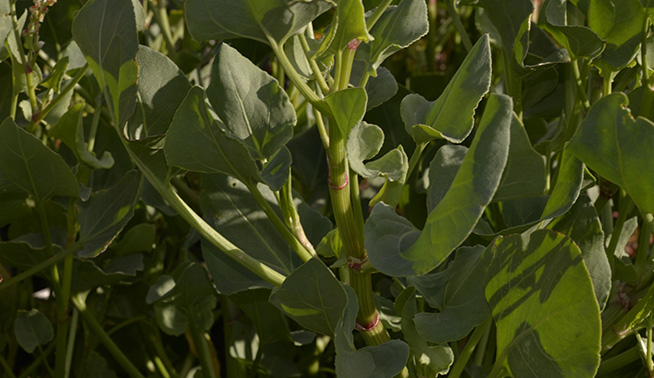
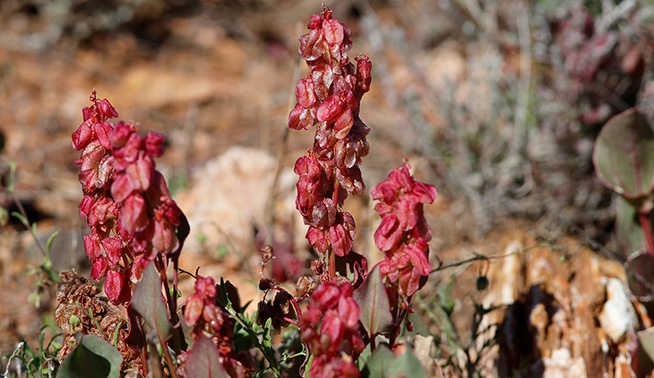
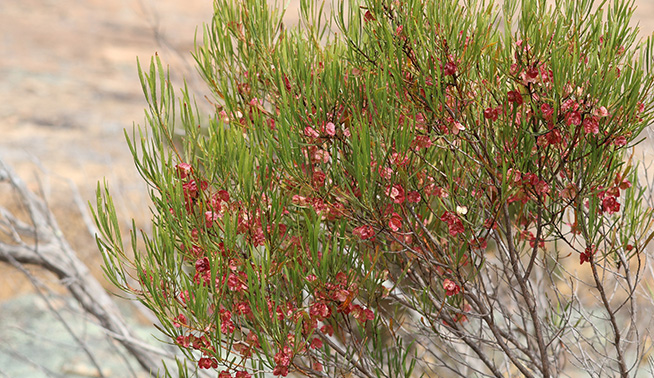
Similar native species: Native hopbushes (Dodonaea spp.) have similar reddish bladdery fruit but differ by their woody stems and shrubby perennial growth.
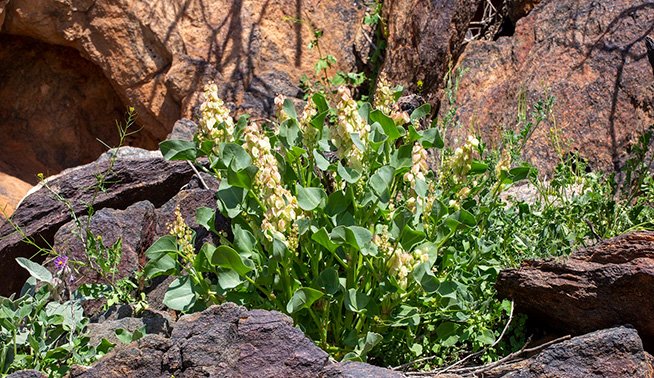
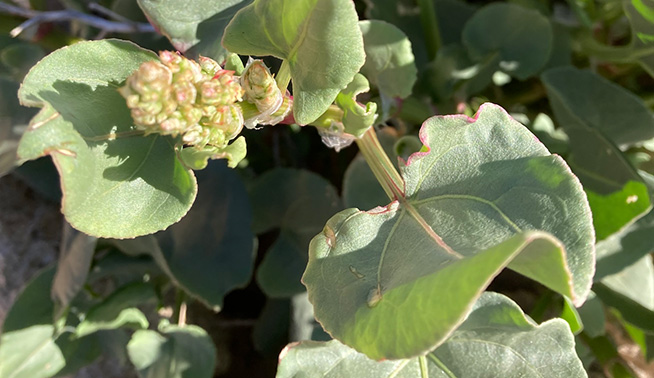
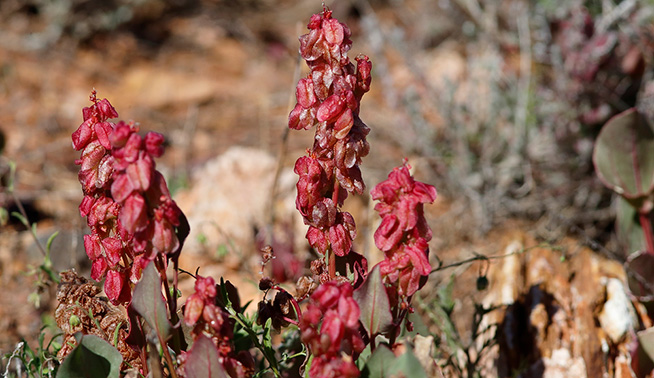
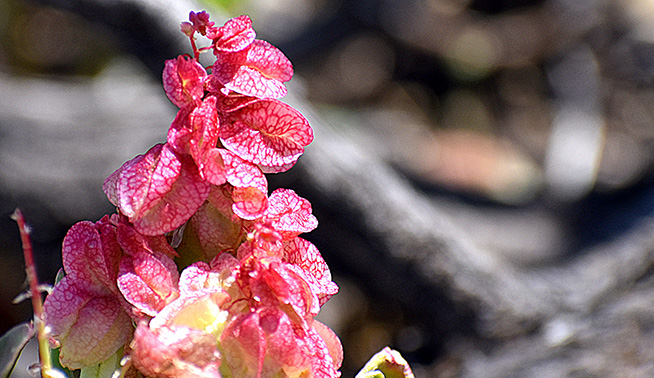
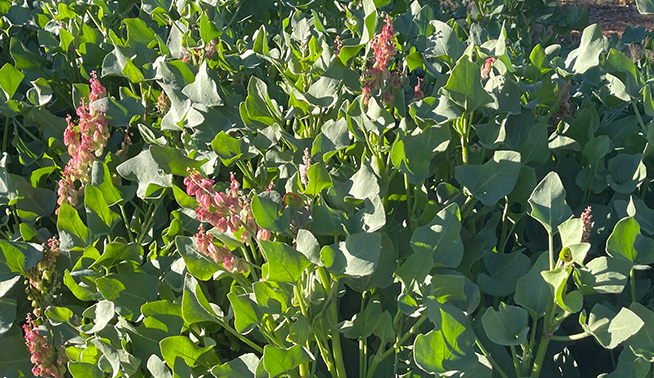
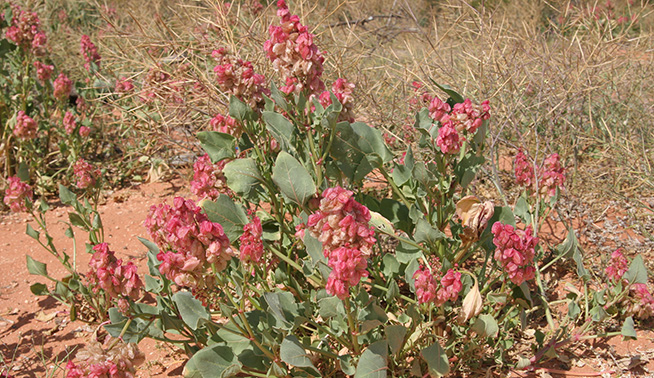
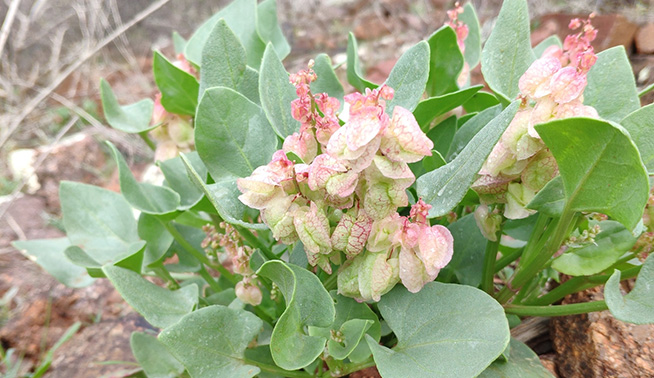
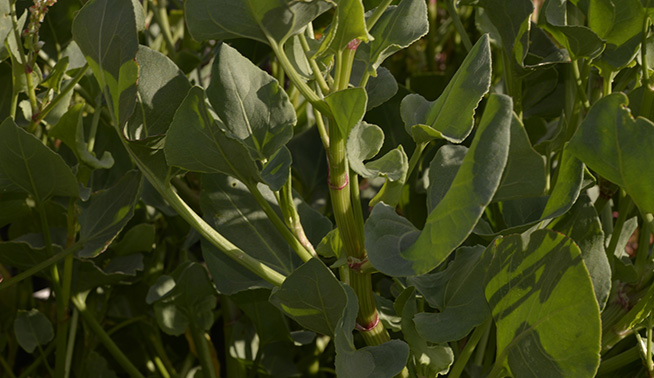
Similar non-native species: Similar to rambling dock (Acetosa sagittata) and clustered dock (Rumex conglomeratus), but ruby dock can be distinguished by its upright habit, hollow stems and slightly fleshy arrowhead shaped leaves with wavy margins. Its flowers, turn bright pink or red and develop into inflated bladdery fruit, unlike the smaller, papery or non-inflated fruit of related species. Rosy dock is an annual, whereas rambling dock and curled dock are perennials with solid stems and rambling dock also produces underground tubers.
Physical removal is effective, and small populations of the plants can be hand pulled.
Slashing can be used for larger infestations, but plants can regrow from tap root so may need to be repeated. Slashing of flowering plants will reduce spread through wind but putting flowers close to ground. Machinery will need to be thoroughly cleaned afterward.
For larger infestations and on actively growing plants, apply a mix of 10L glyphosate (360g/L) with 100L of water, using either a foliar application method or using a wick application/wiping method and wiping the leaves and stems of the plants with the mix. Herbicide may be improved by adding 10L of 2,4-D amine (625 g/L).
LSID number: [51291722] | full LSID: [https://id.biodiversity.org.au/taxon/apni/51291722] | field_lsid: [] | taxon: [Rumex vesicarius]
ALA Reference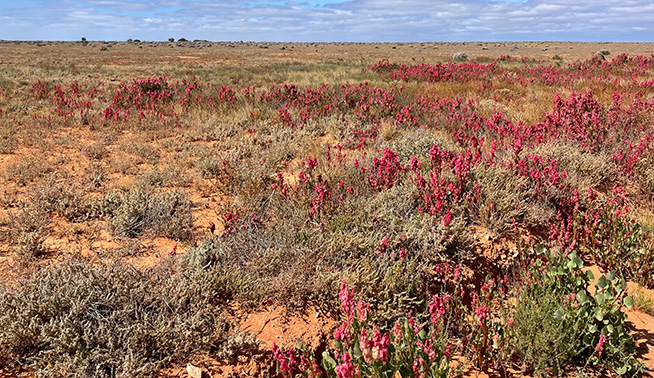
 Atlas of Living Australia. (n.d.).
Rumex vesicarius L. Atlas of Living Australia.
Australian Rangeland Society. (2020, August 19).
Unwelcome guests. Australian Rangeland Society
Clarke, V. (2025, April 16).
OEMP Weed Management Plan. Hancock Iron Ore.
SharkBay.org. (2017, April)
Bladder Dock/Ruby Dock: Acetosa vesicaria (formerly Rumex vesicarius) . SharkBay.org.
Weeds of Australia. (n.d.).
Acetosa vesicaria (L.) A. Love. Weeds of Australia; Lucidcentral.
Western Australian Herbarium (1998–).
Florabase—the Western Australian flora. Department of Biodiversity, Conservation and Attractions.
Atlas of Living Australia. (n.d.).
Rumex vesicarius L. Atlas of Living Australia.
Australian Rangeland Society. (2020, August 19).
Unwelcome guests. Australian Rangeland Society
Clarke, V. (2025, April 16).
OEMP Weed Management Plan. Hancock Iron Ore.
SharkBay.org. (2017, April)
Bladder Dock/Ruby Dock: Acetosa vesicaria (formerly Rumex vesicarius) . SharkBay.org.
Weeds of Australia. (n.d.).
Acetosa vesicaria (L.) A. Love. Weeds of Australia; Lucidcentral.
Western Australian Herbarium (1998–).
Florabase—the Western Australian flora. Department of Biodiversity, Conservation and Attractions.
| JAN | FEB | MAR | APR | MAY | JUN | JUL | AUG | SEP | OCT | NOV | DEC | Notes | |
|---|---|---|---|---|---|---|---|---|---|---|---|---|---|
| Germination | |||||||||||||
| Flowering | |||||||||||||
| Seed set |
| JAN | FEB | MAR | APR | MAY | JUN | JUL | AUG | SEP | OCT | NOV | DEC | Notes | |
|---|---|---|---|---|---|---|---|---|---|---|---|---|---|
| Physical | |||||||||||||
| Chemical |


 Permit (PER96570) for glyphosate